
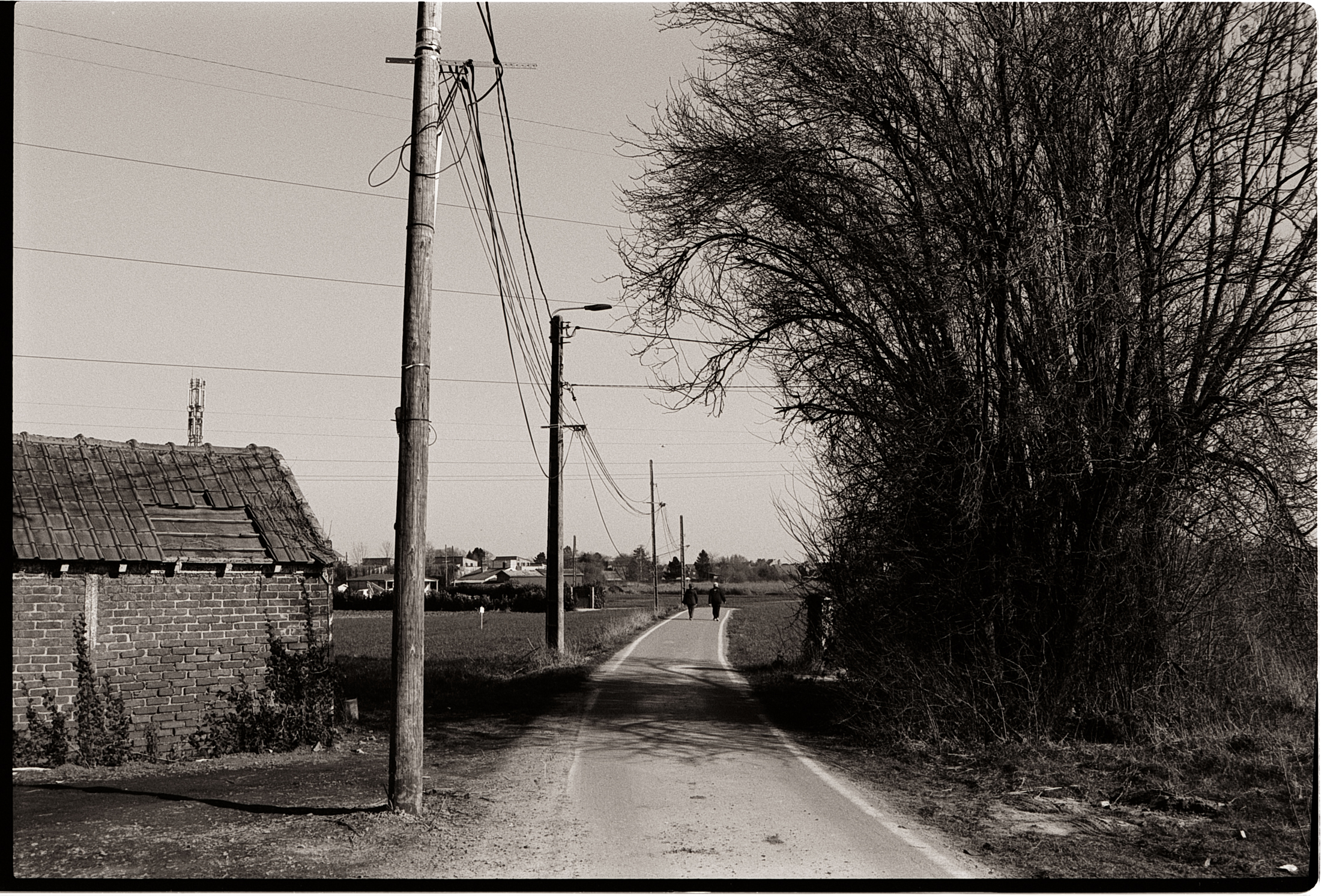
Quel est le vrai sens de l’approche « old school » en photographie ?
Beaucoup de photographes s’auto-proclament adeptes de la photographie « Old School », mais quel sens réel donnent-ils à cette expression ? Faut-il comprendre des réglages en mode manuel, sans autofocus et avec l’écran arrière éteint ? Ou s’agit-il simplement d’images retouchées à la sauce rétro argentique pour donner l’illusion d’authenticité ? Que doit-on vraiment en déduire ? Entre les mystificateurs qui prolifèrent sur les réseaux sociaux et l’arrivée de l’IA qui complique encore les choses, il est difficile de discerner la vérité.
Une esthétique ou une pratique ?
L’expression « old school » est devenue un mot-valise, utilisée à toutes les sauces. Pour certains, c’est une question de style : filtres granuleux, couleurs désaturées, cadres façon Polaroid, typographies vintage… Pour d’autres, c’est un engagement technique : travailler en manuel, sans automatisme, avec un boîtier argentique ou un numérique désactivé à moitié pour « faire comme si ».
Mais peut-on vraiment parler de photographie « à l’ancienne » si l’on recrée artificiellement ce que les photographes d’autrefois faisaient par nécessité, avec des moyens limités et un regard profondément ancré dans leur époque ?
L’illusion du vintage ne fait pas tout
Les réseaux sociaux regorgent d’images qui imitent l’argentique : grain rajouté en post-traitement, flous simulés, teintes pastel façon film périmé.
On cherche à évoquer une époque, mais sans toujours en comprendre les contraintes ni la logique de prise de vue.
Dans bien des cas, ce n’est qu’un vernis nostalgique, un clin d’œil esthétique sans véritable engagement.
C’est un peu comme acheter un jean troué : l’apparence du vécu, sans l’histoire qu’il raconte.
Et si « old school » voulait dire autre chose ?
Peut-être que le vrai esprit « old school », ce n’est pas tant dans les outils que dans l’intention et la rigueur.
C’est :
- Prendre le temps de composer
- Douter avant de déclencher
- Se confronter à l’erreur technique comme à une opportunité d’apprentissage
- Refuser la facilité du tout-automatique
- Et surtout, chercher à dire quelque chose de sincère, même avec des moyens limités
Ce n’est pas tant une question de nostalgie que de cohérence personnelle.
Entre IA, filtres et simulacres : où est l’authenticité ?
Aujourd’hui, avec l’IA générative, les photos « vintage » peuvent être créées sans appareil photo. Des portraits noir et blanc en clair-obscur d’un réalisme bluffant, des scènes de rue « façon Cartier-Bresson » générées en quelques secondes. Dans ce contexte, la photographie old school n’a jamais été aussi… subversive.
Photographier en argentique, ou en numérique sans retouche outrancière, c’est presque un acte de résistance. C’est dire :
« Je préfère une photo imparfaite, mais vraie — à une image parfaite mais vide de toute expérience. »
Un retour à l’essentiel
Se revendiquer « old school », ce n’est pas faire de la photo comme en 1970. C’est choisir une posture : celle de la lenteur, de l’attention, de l’honnêteté. C’est remettre l’expérience humaine au cœur de la démarche. Alors, plutôt que d’imiter l’ancien, faisons vraiment les choses à l’ancienne : avec rigueur, avec humilité, et avec un regard qui cherche du sens.
Si vous aimez les photographies à l’ancienne, je vous conseille ces trois grandes artistes :
The Illusion of « Old School » Photography in the Age of AI and Social Media
In recent years, the phrase « old school photography » has become increasingly popular among photographers on social media. It’s a term often used with pride, signaling a kind of artistic authenticity, a reverence for the past, and a resistance to modern convenience. But when we take a closer look, what does « old school » really mean in contemporary practice? Does it refer to a strict technical discipline—manual mode, manual focus, film cameras, and no rear screen? Or is it more about an aesthetic—a certain retro, nostalgic look often created through digital editing?
The ambiguity of the term opens the door to a broader discussion about authenticity in photography. As AI-generated images proliferate and social media thrives on visual trends, it becomes increasingly challenging to distinguish between genuine craft and aesthetic mimicry. In this essay, we’ll unpack the various interpretations of « old school » photography, explore the motivations behind the label, and examine what this trend tells us about our relationship with images today.
The Technical Definition: A Discipline of Process
Traditionally, « old school » photography implies a return to analog techniques—film cameras, darkroom development, and a slower, more deliberate process. It often suggests a deep understanding of photographic fundamentals: exposure, focus, light metering, and composition without digital assistance.
Photographers who adhere to this school often shoot in manual mode, use manual focus lenses, and may even go as far as taping over the rear screen of their digital cameras to avoid the temptation of instant feedback. For these practitioners, « old school » isn’t just about nostalgia—it’s about discipline. It’s about slowing down, thinking carefully, and engaging fully with the act of making an image.
There’s a meditative quality to this approach. It emphasizes the journey over the result. In a world saturated with instant gratification, this can be a refreshing counterpoint. But is this what most people mean when they say « old school photography » today?
The Aesthetic Approach: Filtered Authenticity
For many, especially on platforms like Instagram, « old school » photography refers less to technique and more to a visual style. Think washed-out colors, light leaks, grain, and vignetting—effects that harken back to film but are applied in post-production. Apps and presets make it easier than ever to emulate vintage film stocks like Kodak Portra or Fujifilm Superia, often without the need to ever touch a roll of film.
This aesthetic version of « old school » is performative. It’s about crafting the appearance of authenticity rather than embodying its discipline. The result might be visually pleasing, but it’s rooted in simulation. It borrows the language of analog photography to evoke a feeling of timelessness, of emotion, of nostalgia—but without necessarily participating in the photographic practices that produced those looks in the first place.
This raises a question: does the use of digital tools to simulate film undermine the idea of authenticity? Or is the intention—to evoke a mood or emotion—just as valid as the means?
The Social Media Effect: A Marketplace of Illusions
Social media plays a central role in shaping our understanding of « old school » photography. On platforms like Instagram, where visual trends move fast and image perfection is the norm, the pressure to stand out often leads to curated identities and stylized aesthetics.
Photographers may adopt the « old school » label as part of their brand, carefully crafting their profiles to appear analog—even if their workflow is entirely digital. Behind the scenes, AI-driven editing tools and batch processing software might be doing much of the heavy lifting.
In this environment, the line between genuine analog practice and digital mimicry becomes blurred. Followers see the finished image, not the process. As a result, perceptions of what constitutes « authentic » photography can become distorted. It’s not about how the image was made—it’s about how it looks.
This phenomenon isn’t new—artists have always played with perception. But with the rise of generative AI and hyperrealistic image synthesis, the stakes are higher. AI tools can now create images that look like they were shot on film, processed in a darkroom, and scanned for publication—all without a camera ever being involved. In this context, claiming to be « old school » can serve as a kind of shield, a way to assert one’s credibility and craftsmanship amidst an ocean of synthetic visuals.
The Role of AI: Redefining Authenticity
Artificial intelligence has complicated our relationship with images. Tools like Photoshop’s generative fill, AI upscalers, and even text-to-image models like Midjourney or DALL·E allow creators to manipulate or fabricate visuals in ways previously unimaginable.
Some photographers embrace these tools as extensions of their creativity. Others see them as a threat to the integrity of the medium. Within this debate, « old school » becomes a battleground—a symbol of purity and resistance in the face of technological encroachment.
But the irony is that many self-proclaimed « old school » images are digitally altered, edited, or even AI-enhanced. This contradiction reveals a deeper truth: that authenticity in photography has always been a moving target. Even in the darkroom days, photographers dodged and burned, cropped, and manipulated negatives. The difference today is that the tools are faster, more accessible, and more powerful.
The Human Factor: Intent Over Tools
Ultimately, what separates genuine « old school » photography from its digital imitation isn’t the camera used or the absence of post-processing. It’s the intent behind the image. It’s the mindset of the photographer—the choice to engage deeply with the craft, to embrace limitations, to value process over perfection.
There are digital photographers who work with as much care and intentionality as any film shooter. And there are film photographers who scan their negatives and manipulate them extensively in Photoshop. The boundaries are not as clear-cut as we might think.
So perhaps the question isn’t whether a photograph is « old school » or not. Perhaps the better question is: does the image communicate something real? Does it carry the imprint of a human hand, a human eye, a human emotion?
Conclusion: Beyond the Label
The phrase « old school photography » will continue to evolve. It will be claimed, co-opted, and redefined as technology advances and artistic trends shift. But rather than clinging to a fixed definition, we might do better to ask what values we want our photography to reflect.
In a world where images can be manufactured in seconds by machines, the most radical thing a photographer can do is to care—to slow down, to pay attention, to tell a story that only they can tell. Whether shot on film or sensor, with a vintage Leica or a smartphone, that kind of authenticity can’t be faked.
And that, more than any retro filter or manual focus lens, might be the truest expression of being « old school » today.


 Studio Argentique
Laisser un commentaire